
The shift is quiet but seismic. In 2024, AI was something you asked questions to. In 2026, AI is becoming something that works for you—without asking.
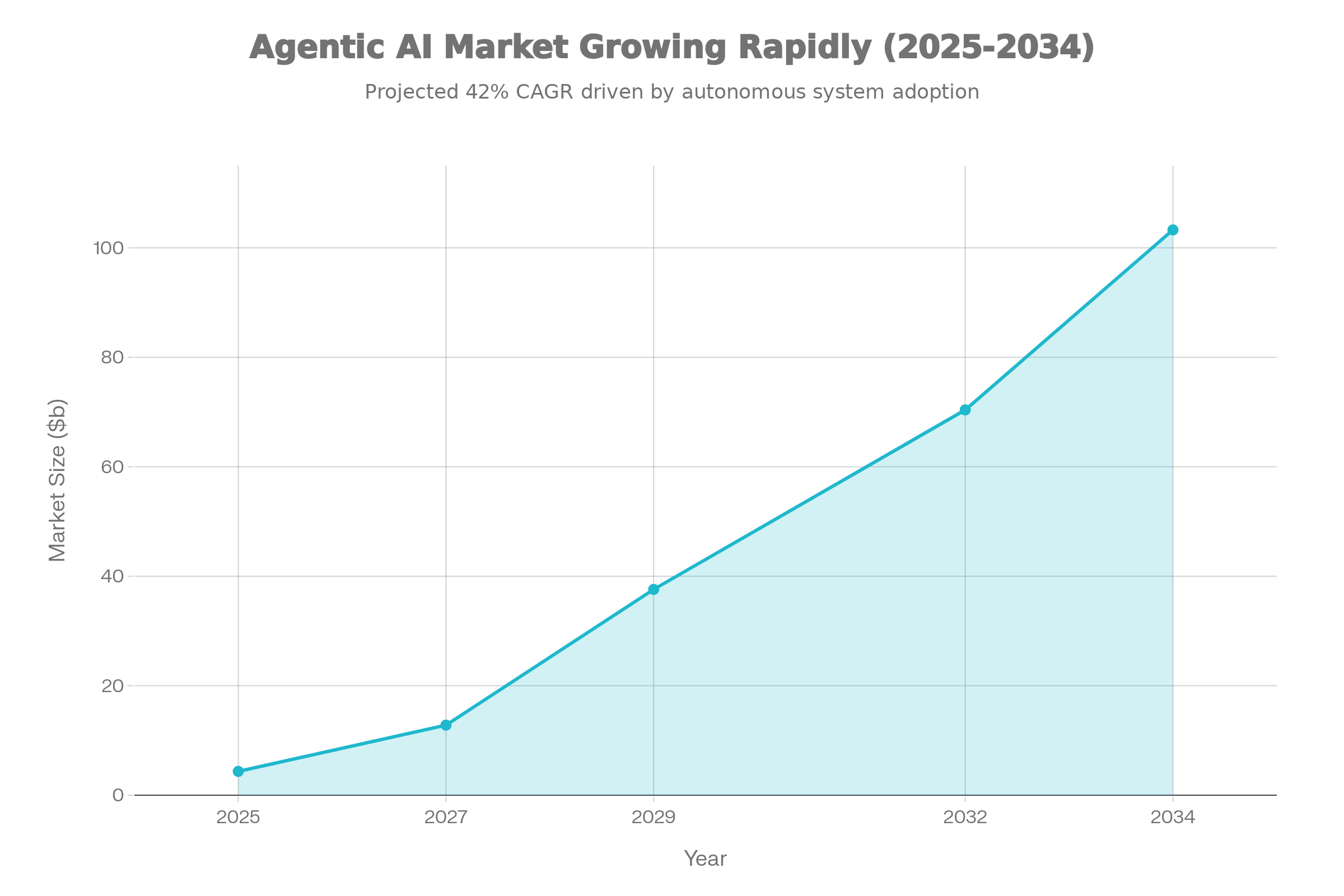
That’s agentic AI, and it’s no longer experimental. As of late 2025, 79% of organizations report some level of agentic AI adoption, and 52% of enterprises have already deployed AI agents into production environments. The autonomous agents market has swelled from $4.35 billion in 2025 to a forecasted $103.28 billion by 2034, expanding at a compound annual growth rate of 42.19%.
This isn’t the fastest-growing segment in enterprise technology by accident. Companies are seeing real results: Fujitsu reduced proposal creation time by 60%. ContraForce automated 80% of cybersecurity investigations. Midjourney slashed monthly GPU costs from $2.1 million to under $700,000 by switching inference to Google TPU v6e.
But here’s the catch: Gartner predicts that over 40% of agentic AI projects will be canceled by 2027. Why? Rising costs, unclear business value, and the infrastructure maturity gap between what vendors promise and what enterprises can actually deploy.
Trend Snapshot
-
What it is: AI systems that independently set goals, make decisions, and execute multi-step workflows with minimal human intervention
-
Adoption timeframe: From <1% of enterprise applications in 2024 to 33% by 2028 (Gartner forecast)
-
What’s new: Reasoning models (GPT-5.2, Claude Opus 4.5) now handle complex tool-calling and long-context reasoning; inference infrastructure shifting away from GPUs to cheaper, specialized ASICs
-
Who it affects: Every enterprise function—sales (proposal automation), customer support (triage + escalation), supply chain (real-time optimization), R&D (hypothesis generation + testing)
-
The signal: Real money is moving. In 2025, 43% of enterprise AI budgets were explicitly allocated to agentic AI initiatives
Why Now: Four Convergences
1. Reasoning models broke through
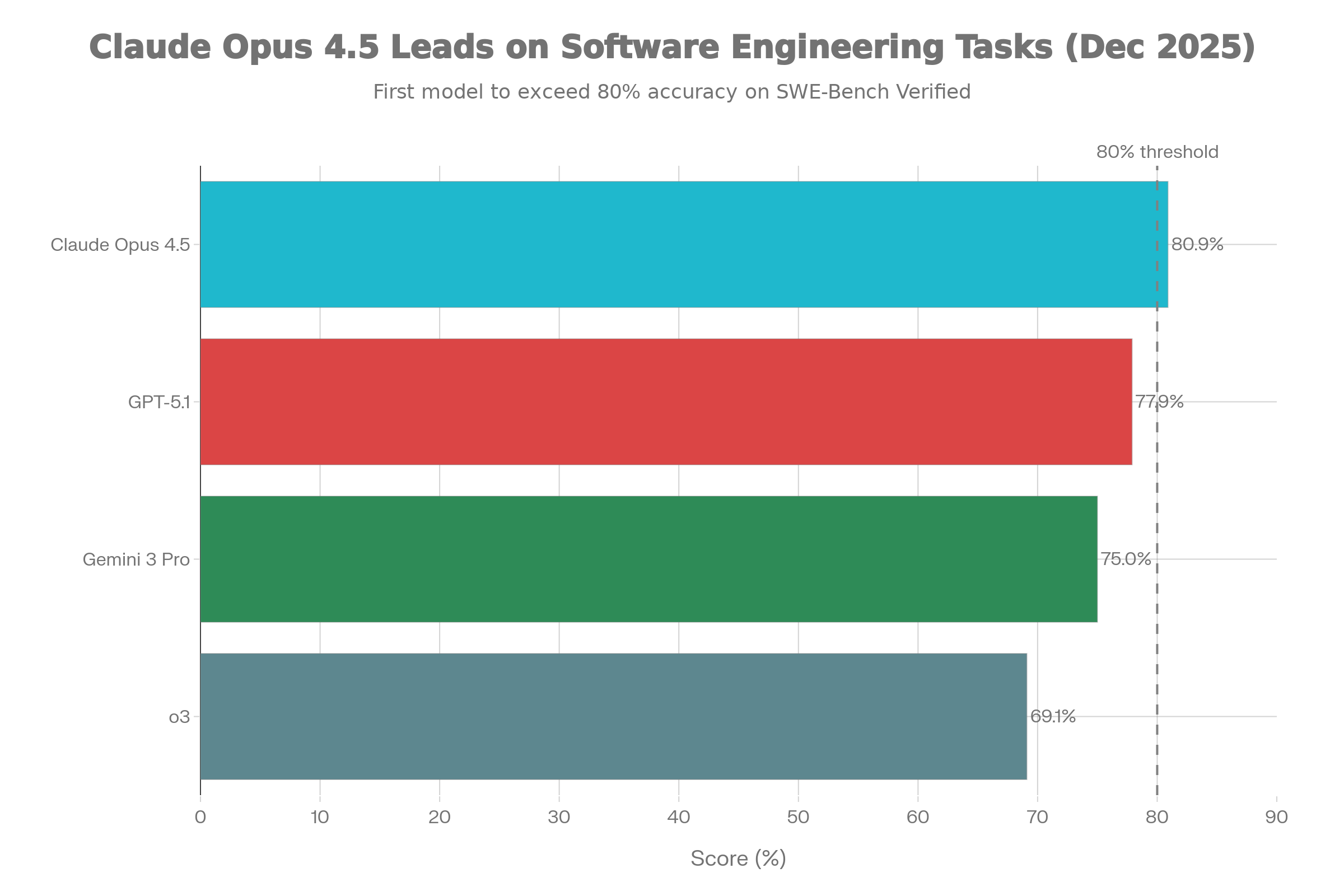
In November 2025, Anthropic released Claude Opus 4.5, the first AI model to exceed 80% on SWE-Bench Verified—a benchmark measuring real-world software engineering tasks. Days later, OpenAI shipped GPT-5.2 in three flavors: Instant (fast, everyday tasks), Thinking (deep reasoning with 30% fewer factual errors), and Pro (maximum accuracy for strategic work). Both models now reliably use tools, handle long documents, and execute multi-turn workflows without hallucinating midway.
This matters because agents depend on reasoning. A customer-support agent needs to understand context across 50+ interactions, decide whether to escalate, consult a knowledge base, and draft a response—all in sequence. Previous models failed at this consistency. These don’t.
2. Inference infrastructure bifurcated
Training AI models costs money (NVIDIA’s H100 GPUs, massive data centers). But running AI in production—inference—is where ongoing costs explode. In 2025, inference workloads consumed two-thirds of all AI compute, up from one-third in 2023. This created a market opportunity: specialized chips that do inference faster and cheaper.
ASICs (Application-Specific Integrated Circuits) and tensor processors now handle 37% of datacenter inference workloads, growing at 28% annually while GPU training reaches maturity. Google’s TPU v6e offers 4.7x better price-performance for inference than NVIDIA’s H100. Amazon’s Inferentia2 and Cerebras’s specialized chips chase similar efficiency gains.
The result: deploying agents is becoming economical. Midjourney’s 65% cost reduction is typical of companies that ruthlessly optimized their inference stack.
3. Enterprise models shifted from “build” to “buy”
In 2024, 47% of AI solutions were built internally; 53% purchased. By 2025, that flipped: 76% of AI use cases are now purchased as ready-made solutions. Why? Time-to-value. A third-party agentic platform (Salesforce Agentforce, Anthropic’s Claude for enterprise, etc.) can move from pilot to production in weeks, not months. Internal builds accumulate debt.
The result: 47% of enterprise AI deals now reach production, compared to 25% for traditional SaaS. Enterprises are buying, not experimenting.
4. Regulatory air cleared (slightly)
The EU’s AI Act framework solidified in August 2025, establishing rules for high-risk systems and transparency for limited-risk AI. The US shifted gears in December 2025 with an executive order prioritizing innovation over precaution and establishing federal preemption over state AI laws. China’s Interim Measures mandate watermarking and privacy safeguards.
This didn’t eliminate regulation, but it created enough clarity for enterprises to move past analysis paralysis. The signal: proceed, but monitor.
Signal vs. Noise
Signal: Reasoning + Tool-Calling Is Real
Claude Opus 4.5 and GPT-5.2 demonstrate unprecedented consistency on long-horizon agentic tasks. Claude achieved 37.6% on ARC-AGI, more than double GPT-5.1’s 17.6%—a measure of fluid reasoning. GPT-5.2 achieved 98.7% accuracy on tool-calling benchmarks. These aren’t marginal improvements; they’re step-function gains in task reliability.
Noise: “Agent Washing” Is Everywhere
Gartner estimates that of the thousands of vendors claiming agentic AI solutions, only about 130 offer genuine autonomous capabilities. The rest have rebranded chatbots, RPA (robotic process automation), and simple automation workflows as “agentic AI” to ride the trend.
Red flag: if a vendor’s “agent” can’t operate autonomously, handle multi-step tasks, or fail gracefully, it’s likely misbranded automation, not agentic AI.
Signal: Enterprise Budgets Are Shifting
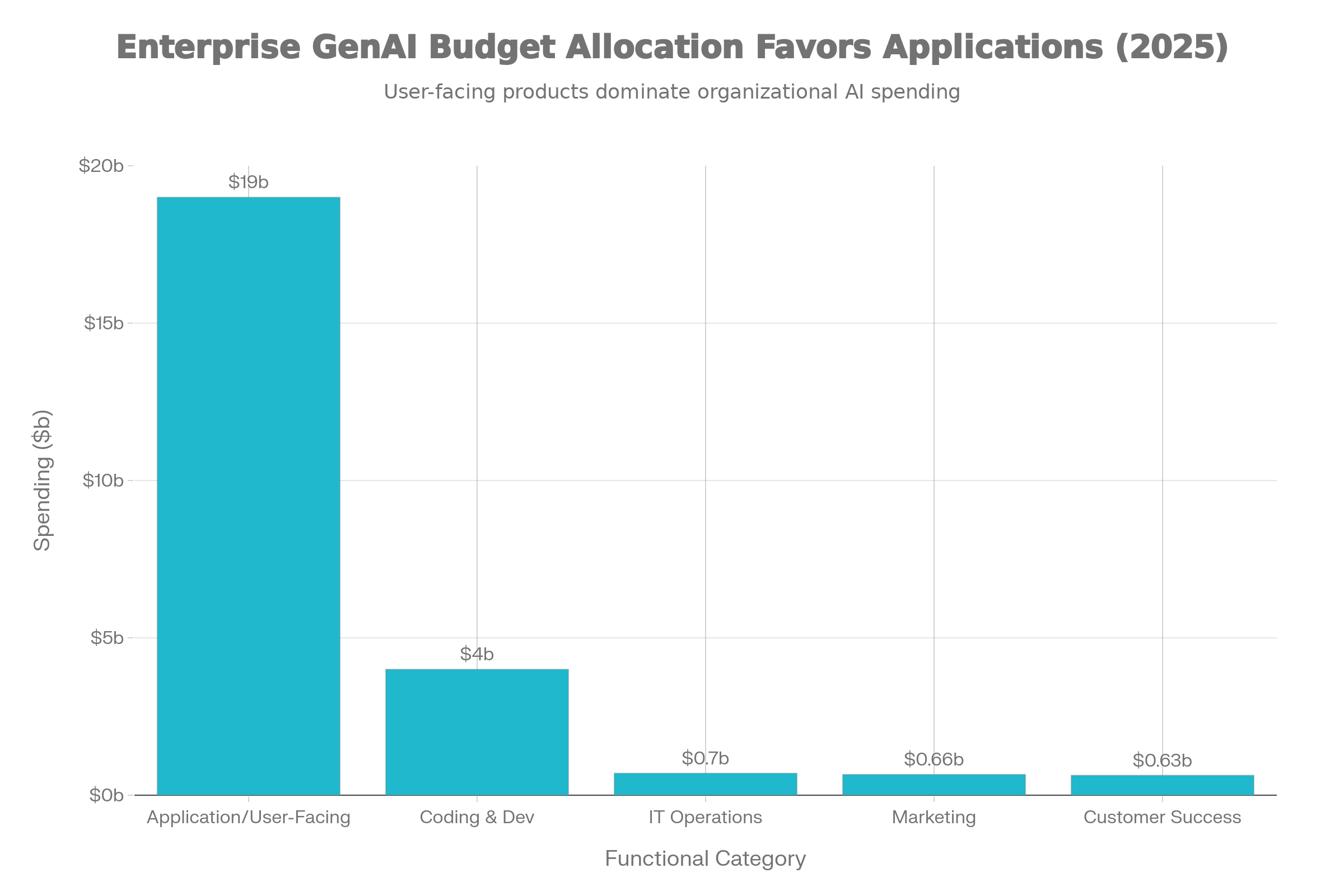
$37 billion was spent on generative AI in 2025, up 3.2x from $11.5 billion in 2024. Of that, 43% was explicitly earmarked for agentic AI initiatives. This isn’t speculation; it’s capital allocation. When enterprises budget for something, they expect to deploy it.
Noise: Adoption Rates Are Misleading
Yes, 79% of organizations report “some level of agentic AI adoption.” But 30% of organizations are exploring it; only 11% actively use agents in production. The gap between pilots and scale is still enormous. Most deployed agents are handling simple workflows: chatbot triage, predictive maintenance, basic content generation.
Signal: ROI Math Is Working (In Specific Cases)
Forrester’s study of organizations using agentic AI platforms measured 333% ROI over three years. A financial services firm using agents for compliance automation saw a 64% reduction in cost per transaction. A retail company reduced marketplace content creation from 20 hours/month to 20 minutes. These are not theoretical.
Noise: Catastrophic Forgetting and Complexity
By late December 2025, enterprise practitioners flagged a growing problem: “catastrophic forgetting,” where AI models lose previous instructions after multiple interactions in the same session. If an agent loses context mid-workflow, it fails. Additionally, moving agentic AI from proof-of-concept to production requires rethinking entire business processes, not just bolting new software onto legacy systems—a far heavier lift than vendors suggest.
Next 90 Days: Three Scenarios
Scenario 1: The “Quiet Scaling” (Most Likely)
Large enterprises (Microsoft, Salesforce, Google, Amazon) quietly deploy agentic AI across finance, customer support, and supply chain. Midmarket companies accelerate pilot-to-production timelines. Gartner’s 40% failure rate begins to surface as projects that oversold themselves get quietly canceled. By March 2026, analyst firms publish first retrospectives: “Why 40% of Your Agentic AI Projects Will Fail.”
Trigger: Meta releases “Mango” and “Avocado” models in Q1 2026; adoption velocity increases. Simultaneously, early-stage agentic projects start showing cost overruns (infrastructure, integration, talent).
Scenario 2: The “Catastrophic Forgetting Reckoning” (Moderate Probability)
A high-profile failure emerges: an agent loses context during a critical workflow (e.g., financial transaction, healthcare decision) and a customer-facing incident occurs. Media amplifies the story. CXOs become more cautious, slowing adoption. Researchers accelerate work on memory-safe agentic systems. By Q2 2026, 2026 is repositioned as the “year of continual learning” (not agentic AI).
Trigger: A major enterprise announces an agent-related incident; industry press covers it heavily.
Scenario 3: The “Inference Chip Victory Lap” (Lower Probability)
ASICs and TPUs continue capturing inference workloads faster than expected. By March, cloud providers (Google, AWS, Microsoft) offer agentic AI services at 40-50% cheaper pricing than June 2025, causing a second wave of enterprise adoption and making the 40% failure rate moot as the economics suddenly shift.
Trigger: Major cloud provider announces aggressive inference pricing. Startups using TPU-based inference become profitable much faster.
What You Should Do Next
-
Separate signal from noise in vendor claims. Ask potential agentic AI vendors: Can your agent handle multi-step tasks without human intervention? Can it escalate gracefully when uncertain? Can it maintain state across 50+ interactions? If the answer to any is “we’re working on it,” walk away. (At least 87% of vendors won’t pass this test.)
-
Start with a high-ROI use case, not a cool demo. Pilot agentic AI in a function where you have clear cost-per-transaction metrics: customer support (cost per ticket), supply chain (inventory optimization), compliance (cost per audit). Avoid vague productivity gains like “faster decision-making.”
-
Invest in orchestration and monitoring, not just models. Agentic AI requires operational infrastructure: fallback systems, escalation triggers, audit trails, real-time monitoring. Gartner found that 40% of projects fail partly because enterprises underestimated these operational costs. Budget for integration engineers, not just data scientists.
-
Plan for continual learning headaches. As agents operate, they will encounter new scenarios, lose previous instructions, and require retraining. Design with this in mind: assume agents need weekly fine-tuning cycles, not quarterly retraining.
-
Watch inference economics closely. The shift to ASICs and TPUs could dramatically improve agentic AI ROI by Q2 2026. If your current TCO (total cost of ownership) is tight, defer large deployments 60–90 days while the pricing landscape settles.
-
Benchmark against reasoning models released in Q1/Q2 2026. Meta’s Mango and Avocado, plus updates from OpenAI and Anthropic, will likely raise the ceiling on what agents can do autonomously. Don’t lock yourself into contracts today that ignore those gains.
-
Prepare your teams for workforce change. By 2028, Gartner forecasts 15% of day-to-day work decisions will be made autonomously. This doesn’t mean 15% of jobs disappear; it means roles shift. Start reskilling customer-support agents toward escalation and empathy work, not transactional problem-solving.
FOOTNOTES
7t.ai, “Agentic AI Adoption Statistics: A Tech Revolution in Numbers,” November 6, 2025. 79% of organizations report some level of agentic AI adoption based on 2025 market research aggregation.
Google Cloud, “Enterprise AI Agent Deployment Study,” 2025. 52% of enterprises have deployed AI agents in production environments as of Q4 2025.
CMR Berkeley, “Adoption of AI and Agentic Systems: Value, Challenges, and Pathways,” August 14, 2025. Global autonomous agents market forecast: $4.35 billion (2025) to $103.28 billion (2034) at 42.19% CAGR.
Kanerika, “Agentic AI Enterprise Adoption: How Companies Are Scaling in 2025,” October 30, 2025. Fujitsu case study: agentic AI reduced sales proposal creation time by 60%.
Kanerika, “Agentic AI Enterprise Adoption: How Companies Are Scaling in 2025,” October 30, 2025. ContraForce case study: agentic AI automated 80% of cybersecurity incident investigations.
TechOutlet EU, “AI Hardware Crisis 2026: GPU vs ASIC vs Edge AI,” December 18, 2025. Midjourney case study: TPU v6e migration reduced monthly GPU costs from $2.1 million to <$700,000 (65% reduction).
Gartner, “Gartner Predicts Most Agentic AI Projects Will Fail by 2027,” June 24, 2025. Over 40% of agentic AI projects will be canceled by end of 2027 due to rising costs, unclear ROI, and inadequate risk controls.
USAII.org, “Top 10 AI Trends to Watch in 2026,” September 30, 2025. Gartner prediction: agentic AI will expand from <1% of enterprise applications (2024) to 33% by 2028.
TechOutlet EU, “AI Hardware Crisis 2026: GPU vs ASIC vs Edge AI,” December 18, 2025. ASICs projected to take 37–70% of inference workloads by 2025–2028; inference now 2/3 of AI compute (up from 1/3 in 2023).
Kanerika, “Agentic AI Enterprise Adoption: How Companies Are Scaling in 2025,” October 30, 2025. 43% of enterprise AI budgets are now explicitly allocated to agentic AI initiatives as of Q4 2025.
Humai.blog, “Claude Opus 4.5 Review: The Best AI Coding Model of 2025,” November 30, 2025. Claude Opus 4.5 released November 24, 2025; first model to exceed 80% on SWE-Bench Verified at 80.9%.
OpenAI, “Introducing GPT-5.2,” December 10, 2025. GPT-5.2 released December 10, 2025 in three variants (Instant, Thinking, Pro) with improvements in long-context reasoning (30% fewer factual errors on Thinking variant) and tool-calling accuracy (98.7% on Tau2-bench).
EODHD, “AI Infrastructure: The Picks and Shovels of the Gold Rush,” December 24, 2025. Inference workloads consume 2/3 of all AI compute in 2025 (up from 1/3 in 2023); inference chip market growing 28% CAGR.
TechOutlet EU, “AI Hardware Crisis 2026: GPU vs ASIC vs Edge AI,” December 18, 2025. ASICs expected to take over 37% of datacenter inference workloads in 2025.
EODHD, “AI Infrastructure: The Picks and Shovels of the Gold Rush,” December 24, 2025. Inference chips demonstrate 28% CAGR; inference chip market $31 billion (2024) to projected $167 billion (2032).
TechOutlet EU, “AI Hardware Crisis 2026: GPU vs ASIC vs Edge AI,” December 18, 2025. Google’s TPU v6e offers 4.7x better price-performance for inference than NVIDIA H100 and consumes 67% less power.
Menlo VC, “2025: The State of Generative AI in the Enterprise,” December 14, 2025. Enterprise AI purchasing shifted from 47% build/53% buy (2024) to 76% purchased/24% built (2025).
Menlo VC, “2025: The State of Generative AI in the Enterprise,” December 14, 2025. 47% of enterprise AI deals reach production (vs. 25% for traditional SaaS), indicating higher conversion and commitment.
Anecdotes.ai, “AI Regulations in 2025: US, EU, UK, Japan, China & More,” November 23, 2025. EU AI Act framework solidified with rules effective August 2025 distinguishing unacceptable-risk, high-risk, limited-risk, and minimal-risk AI systems.
H.K. Law, “What to Watch as White House Moves to Federalize AI Regulation,” December 14, 2025. White House issued executive order “Ensuring a National Policy Framework for Artificial Intelligence” on December 11, 2025, establishing federal preemption over state AI laws.
Future of Life Institute, “AI Safety Index Winter 2025,” December 1, 2025. China’s Interim Measures require data minimization, lawful handling of user information, and mandatory watermarking of AI-generated content.
Vellum AI, “Claude Opus 4.5 Benchmarks,” December 2, 2025. Claude Opus 4.5 achieved 37.6% on ARC-AGI (fluid reasoning), vs. GPT-5.1 17.6% and Gemini 3 Pro 31.1%.
OpenAI, “Introducing GPT-5.2,” December 10, 2025. GPT-5.2 Thinking achieves 98.7% on Tau2-bench Telecom (tool-calling accuracy across long, multi-turn tasks).
National CIO Review, “Gartner Predicts Most Agentic AI Projects Will Fail by 2027,” June 24, 2025. Of thousands of vendors claiming agentic AI solutions, Gartner estimates only ~130 offer genuine agentic capabilities (widespread “agent washing”).
Menlo VC, “2025: The State of Generative AI in the Enterprise,” December 14, 2025. Enterprises spent $37 billion on generative AI in 2025, up 3.2x from $11.5 billion in 2024.
Kanerika, “Agentic AI Enterprise Adoption: How Companies Are Scaling in 2025,” October 30, 2025. 43% of enterprise AI budgets are explicitly allocated to agentic AI initiatives (multimodal.dev data).
7t.ai, “Agentic AI Adoption Statistics: A Tech Revolution in Numbers,” November 6, 2025. 79% of organizations report some level of agentic AI adoption as of 2025.
Fortune, “2025 Was the Year of Agentic AI. How Did We Do?,” December 15, 2025. Deloitte survey: 30% of organizations exploring agentic AI; only 11% actively use agents in production.
Writer.com, “AI ROI Calculator: From Generative to Agentic AI Success in 2025,” December 10, 2025. Forrester Total Economic Impact study: organizations using agentic AI platform achieved 333% ROI with $12.02 million net present value over three years.
Writer.com, “AI ROI Calculator: From Generative to Agentic AI Success in 2025,” December 10, 2025. Financial services case study: AI-driven compliance automation reduced cost per transaction by 64%.
Writer.com, “AI ROI Calculator: From Generative to Agentic AI Success in 2025,” December 10, 2025. E-commerce case study: marketplace content creation reduced from 20 hours/month to 20 minutes per item using agentic AI.
YouTube, “December 26, 2025 AI Updates Weekly,” December 25, 2025. 2026 forecast: “year of continual learning” to address catastrophic forgetting problem where models lose previous instructions during multi-step interactions.
Kanerika, “Agentic AI Enterprise Adoption: How Companies Are Scaling in 2025,” October 30, 2025. Gartner: infrastructure isn’t ready; most companies bolt AI onto existing systems, limiting what agents can achieve. Full value requires orchestration layers, monitoring systems, and escalation paths.
YouTube, “December 26, 2025 AI Updates Weekly,” December 25, 2025. Lev Selector summary: 2026 positioned as year of continual learning, not agentic AI hype, due to catastrophic forgetting challenges in multi-turn interactions.
National CIO Review, “Gartner Predicts Most Agentic AI Projects Will Fail by 2027,” June 24, 2025. “Agent washing” dominates market; genuine agentic AI solutions remain rare among thousands of claims.
Kanerika, “Agentic AI Enterprise Adoption: How Companies Are Scaling in 2025,” October 30, 2025. Gartner: 40% project failure rate driven by underestimation of operational complexity, including orchestration, monitoring, and escalation infrastructure costs.
USAII.org, “Top 10 AI Trends to Watch in 2026,” September 30, 2025. Gartner prediction: 15% of day-to-day work decisions could be performed by agentic AI by 2028 (up from virtually none in 2024).